

Amla, also known as Indian Gooseberry, is a nutrient-rich fruit that has been traditionally used in India for generations. It contains vitamin C, dietary fiber and various antioxidant compounds, making it a nutritious addition to a balanced diet.
If you are searching for Amla benefits, benefits of eating Amla, Amla benefits for hair and skin, or how to eat Amla, this article explains the potential benefits and important precautions.
What Nutrients Are Found in Amla?
Amla contains several important nutrients and naturally occurring plant compounds, including vitamin C, dietary fiber and antioxidants.
Its nutritional profile makes it a useful fruit to include as part of a varied and balanced diet.

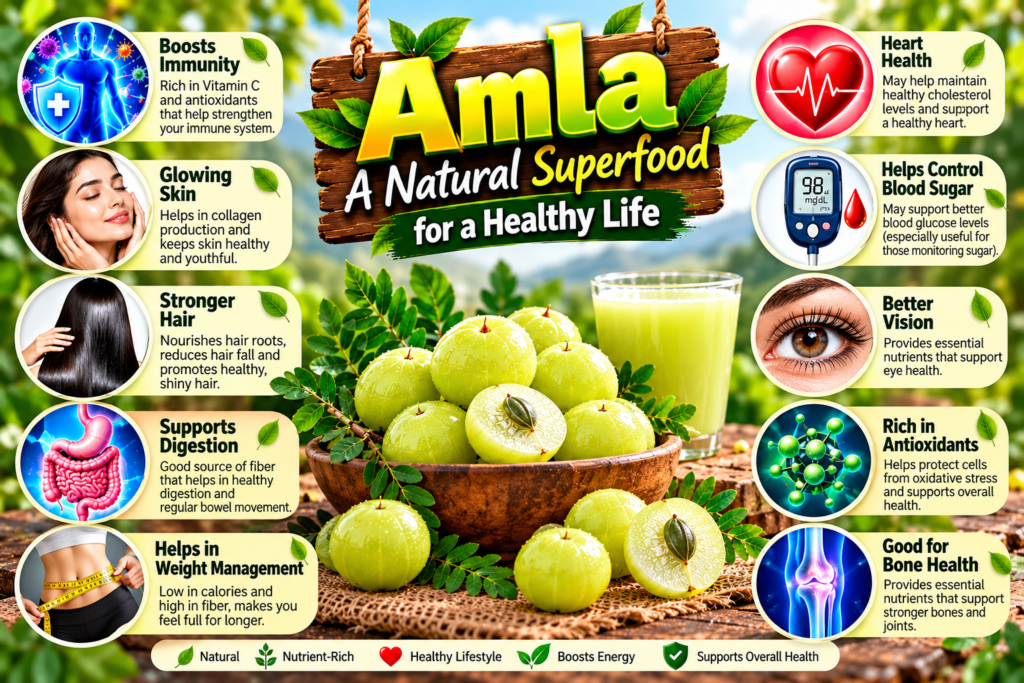
10 Potential Health Benefits of Amla
1. Supports Normal Immune Function
Amla is a good source of vitamin C. Vitamin C plays an important role in the normal functioning of the immune system.
Including vitamin-C-rich foods such as Amla in a balanced diet can contribute to overall nutrition and immune health.
2. May Support Healthy Skin
Vitamin C plays an important role in collagen production, which is essential for maintaining the normal structure of the skin.
Including Amla and other vitamin-C-rich foods in a balanced diet can support overall skin nutrition.
3. May Support Hair Health
Amla has traditionally been used in Indian hair-care practices.
The nutrients found in Amla can contribute to overall nutritional health, which is important for maintaining healthy hair. However, hair loss can have many different causes, and eating Amla alone should not be considered a treatment for hair loss.
4. Supports Healthy Digestion
Amla contains dietary fiber. Adequate fiber intake is important for normal digestion and regular bowel movements.
Adding fiber-rich foods such as fruits, vegetables and whole grains to your diet can support digestive health.
5. Rich in Antioxidant Compounds
Amla contains naturally occurring antioxidant compounds.
Antioxidants help support the body’s natural defense mechanisms against oxidative stress. A diet containing a variety of fruits and vegetables provides different beneficial plant compounds.
6. May Support Heart Health
A balanced diet rich in fruits, vegetables, whole grains and other nutrient-dense foods is important for cardiovascular health.
Amla can be included as one component of such a diet. However, Amla should not be considered a treatment for heart disease.
7. May Be Helpful for People Monitoring Blood Sugar
Amla contains fiber and bioactive plant compounds, and researchers have studied its potential relationship with blood glucose.
However, people with diabetes should not replace prescribed medication with Amla. If you take diabetes medication, speak with your healthcare professional before making significant dietary changes or using concentrated Amla supplements.
8. Supports Overall Eye Nutrition
Good eye health depends on overall nutrition and a balanced diet containing a variety of vitamins, minerals and other nutrients.
Amla can be included as part of a nutritious diet, although it should not be considered a treatment for eye conditions.
9. Can Be Included in a Healthy Weight-Management Diet
Amla is a fruit that contains dietary fiber and can be included in a balanced eating pattern.
However, Amla alone does not cause weight loss. Healthy weight management generally depends on overall calorie intake, food quality, physical activity, sleep and other lifestyle factors.
10. Provides Valuable Nutrition
Rather than considering Amla a “miracle fruit,” it is better to view it as a nutritious food that can contribute to a varied diet.
Eating a wide range of fruits, vegetables, whole grains, legumes and protein-rich foods is more important for overall health than relying on a single food.
How Can You Eat Amla?
Amla can be incorporated into your diet in several ways:
- Fresh Amla
- Sliced Amla
- Amla added to salads or meals
- Amla powder in appropriate amounts
- Homemade Amla preparations
- Amla juice with little or no added sugar
If you drink Amla juice, check the label or recipe for added sugar.
How Much Amla Should You Eat Every Day?
There is no single universally appropriate daily amount of Amla for everyone.
The appropriate amount can depend on your age, overall diet, health conditions and medications.
Avoid following social-media recommendations that encourage consuming very large quantities of Amla without professional guidance.
Who Should Be Careful With Amla?
Most people can include Amla as part of a normal balanced diet. However, if you have a medical condition, take regular medication, or experience digestive discomfort after consuming Amla, speak with a doctor or qualified healthcare professional.
People taking diabetes medication should be particularly cautious with concentrated Amla products or supplements and should discuss them with their healthcare provider.
Fresh Amla vs Amla Juice
Fresh Amla can be a simple way to include the fruit in your diet.
Amla juice can also be consumed, but commercially prepared products may contain added sugar. Always check the nutrition label before purchasing packaged Amla juice.
For everyday nutrition, whole fruits generally provide dietary fiber that may be reduced in some juice products.
Amla Benefits for Hair and Skin: What You Should Know
Amla is extremely popular in traditional Indian hair and beauty practices. It is often associated with stronger-looking hair and healthier skin.
However, it is important to distinguish traditional use from proven medical treatment.
Amla can provide nutrients as part of a healthy diet, but persistent hair loss, severe acne, unusual skin changes or other symptoms should be evaluated by a healthcare professional rather than treated solely with Amla.
Conclusion
Amla, or Indian Gooseberry, is a nutritious fruit containing vitamin C, dietary fiber and antioxidant compounds.
Including Amla in a balanced diet may contribute to overall nutrition and support normal immune function, digestion and healthy skin. It can also be part of a healthy lifestyle focused on nutritious foods.
However, Amla is not a miracle cure or replacement for medical treatment.
For better long-term health, focus on a balanced diet, regular physical activity, adequate sleep and appropriate medical care when needed.
Frequently Asked Questions About Amla
Is it good to eat Amla every day?
Amla can be included in a balanced diet, but the appropriate amount varies from person to person. There is no universal requirement to eat it every day.
What are the main benefits of Amla?
Amla provides vitamin C, dietary fiber and antioxidant compounds. It can contribute to overall nutrition and may support normal immune and digestive function.
Is Amla good for hair?
Amla has a long history of traditional use in hair care. Eating Amla can contribute nutrients to the diet, but it should not be considered a standalone treatment for hair loss.
Is Amla good for skin?
Amla contains vitamin C, which plays a role in collagen production. It can therefore be included as part of a nutrient-rich diet that supports overall skin health.
Can people with diabetes eat Amla?
People with diabetes should discuss their individual diet with their healthcare professional. Amla should not replace prescribed diabetes medication.
What is the best way to eat Amla?
Fresh Amla is one simple option. Amla can also be consumed as powder or juice. If choosing packaged Amla juice, check for added sugar.
Does Amla help with weight loss?
Amla can be part of a healthy diet, but eating Amla alone does not cause weight loss. Sustainable weight management depends on overall diet and lifestyle.
Disclaimer: This article is for general informational and educational purposes only. It is not a substitute for professional medical advice, diagnosis or treatment.
Credit: https://chatgpt.com/