
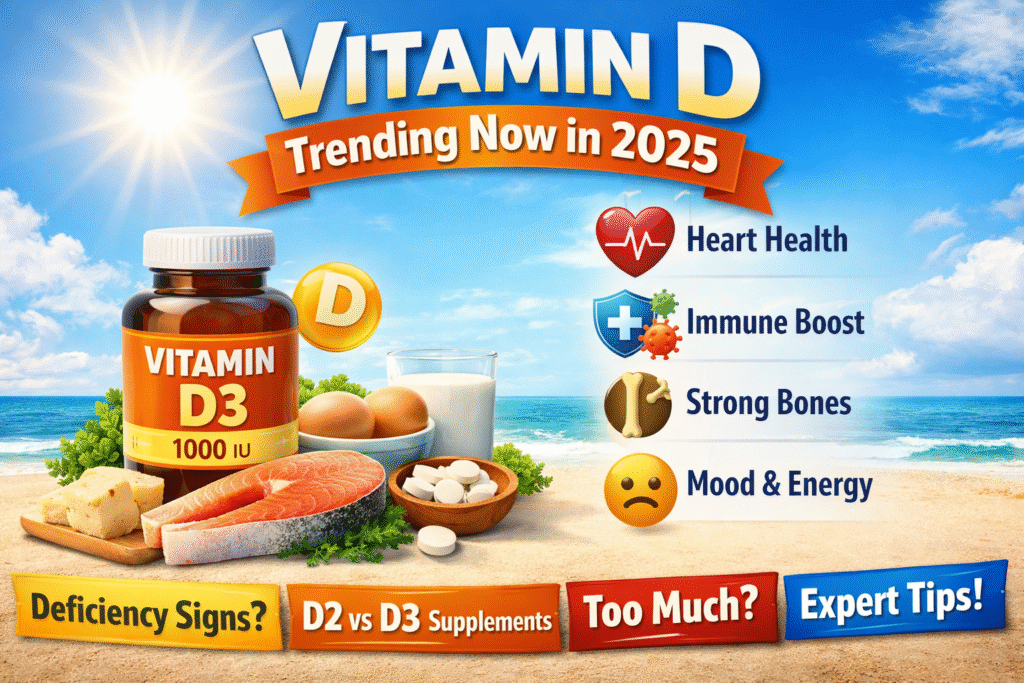
Why Vitamin D Is Trending in 2025
Recent research and media attention have pushed Vitamin D back into the spotlight:
- Scientists are linking personalized Vitamin D3 supplementation to lower heart-attack recurrence in high-risk individuals.
- New findings suggest different forms of supplements, such as D2 vs. D3, may not be equally effective — with D3 being superior for immune support.
- Experts are warning about risks of over-supplementation, emphasizing the importance of professional guidance.
- As fasting and indoor lifestyles continue globally, Vitamin D deficiency rates remain high, increasing interest in testing and supplementation.
What Is Vitamin D and How It Works
Vitamin D is a fat-soluble vitamin that:
- Acts more like a hormone than a typical nutrient.
- Is produced in your skin when exposed to sunlight (UVB).
- Helps the body absorb calcium and phosphorus, crucial for strong bones.
There are two main forms:
- Vitamin D2 (ergocalciferol) — plant-based source
- Vitamin D3 (cholecalciferol) — animal source and the form your body naturally makes from sunlight
Top Health Benefits of Vitamin D
Bone & Muscle Health
Vitamin D supports calcium absorption, preventing conditions like rickets in children and osteomalacia or osteoporosis in adults.
Immune Support
It plays a role in regulating immune responses and may reduce the severity of infections.
Heart Health
Emerging evidence suggests personalized Vitamin D intake after cardiac events can dramatically reduce the risk of a second heart attack.
Mood & Mental Well-Being
Vitamin D is linked to neurotransmitter regulation, including serotonin — influencing mood and potentially helping with conditions like seasonal affective disorder (SAD).
Metabolic & Chronic Disease Links
Research shows Vitamin D may help with insulin resistance, glucose metabolism and chronic disease risk.
Symptoms & Risks of Deficiency
Vitamin D deficiency is very common worldwide, especially in people with limited sun exposure or darker skin. Common signs include:
• Fatigue
• Bone pain or muscle weakness
• Increased infection risk
• Mood disturbances and depression
Deficiency can lead to serious issues like:
- Rickets (in children)
- Osteomalacia or osteoporosis (in adults)
- Increased susceptibility to falls and fractures
How to Get Enough Vitamin D
Sunlight Exposure
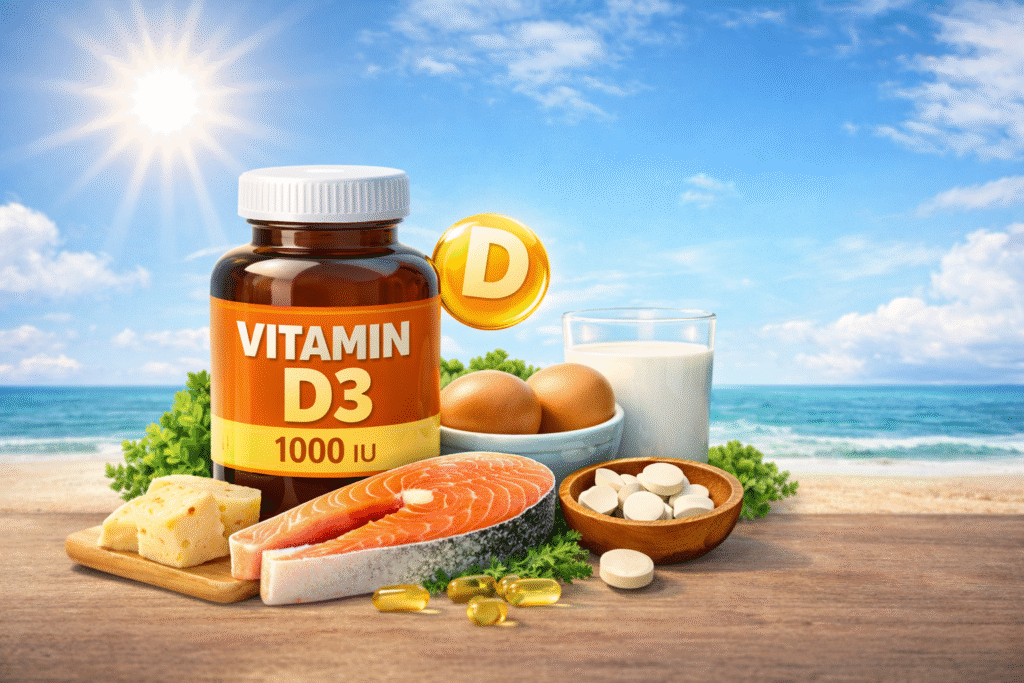
Moderate sunlight exposure (10–30 min, a few times a week) is one of the most natural ways to boost Vitamin D.
Food Sources
Foods with Vitamin D include:
- Fatty fish like salmon and trout
- Cod liver oil
- Fortified dairy and plant milks
- UV-exposed mushrooms
Supplements
Vitamin D3 supplements are generally recommended over D2 for better long-term blood levels and effectiveness, but always consult a healthcare provider first.
Safety: Too Much Vitamin D?
While deficiency is common, excessive intake can be harmful:
- Hypercalcemia (high blood calcium)
- Kidney issues
- Nausea, fatigue and neurological symptoms
This is why doctors emphasize tailored dosing and blood testing before long-term supplementation.
Final Thoughts — The Bottom Line
Vitamin D is much more than a bone nutrient. In 2025 it’s trending due to its:
Impacts on immunity and heart health
Role in aging and chronic disease research
Debates over supplement forms and optimal dosing
Continued high rates of deficiency worldwide
Whether you’re optimizing wellness or concerned about deficiency, staying informed about Vitamin D continues to be a smart health strategy.
Blog and Image Credit : ChatGPT https://chatgpt.com/